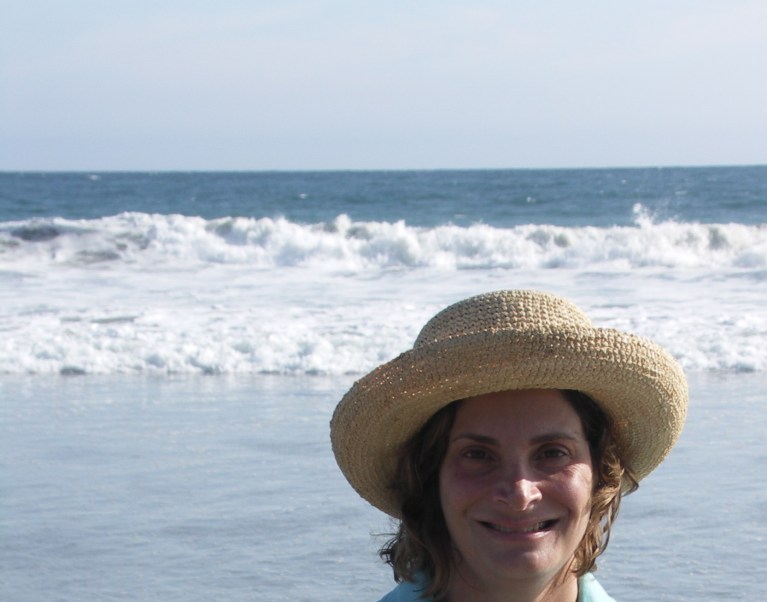
PROSTITUTING MYSELF FOR THE SHINGLES VACCINE: Advocating For A Shot I’m Sorry To Need And Don’t Really Want

Standard

By Elissa Caterfino Mandel

I’m officially in the age group that requires shots for diseases  I didn’t used to think about.  Let the new two-round shingles shot serve as Exhibit A in a discussion of things that people my age are oddly hot for; personally, I’d rather use my chits to clamor for good seats to “The Ferryman”.

Many of my friends who’ve gotten the shot have ended up with flu symptoms 24 or 48 hours after the first dose.  High fevers, body aches, and chills are not my idea of enjoyable mid-week activities, so I put the shot on hold until I  felt I had time to slot the flu into my schedule.   

It’s crazy, looking at my calendar to decide on an optimal flu time.  Do I give up lunch with my best friend?  A weekend with my husband?  Three work appointments?  Exercise?  Ultimately, I did what I always do when I’m driving myself crazy about something I don’t want to do.  I jumped in.

Knowing the shot is in short supply, I called the pharmacy in the ambulatory care center near my home, where my internist told me “they have plenty of it”.  While they may have plenty of it, they apparently didn’t have plenty of it for me. “Oh, yes, we have it,” the woman on the phone assured me. “But we can’t give it to any new people.”

New people?  I think the issue is exactly the opposite.  I’m an old person or at least a semi-old person by the standards of the shingles shot.  I just squeak in to the eligibility pool at age 57.   When I asked the clerk what she meant by a “new person,”  she told me that because they don’t have enough of dose two, they can’t give dose one to new patients.  Yes, it’s ridiculous but true.  They’re sitting on a veritable stash of dose one  to make sure they have enough of part two to complete the course of the vaccination.

Keep in mind that between two to six months can go by between the time of the first shot and the second.  Did they really think they wouldn’t have dose two in time for my 58th birthday?  The woman told me she couldn’t be sure; supplies were iffy.  Really?  It’s hard to believe that there is such a run on a shot that seems to make every third person sick.

Something else occurred to me.   Shouldn’t they be obligated by law, or at the very least by the health department, to send the excess dose one back to the CDC or to another local pharmacy?  They weren’t behaving like a health organization.  They were hoarders. I flash backed to when my kids were little and limited-edition Beanie Babies would show up at certain toy stores for a short period of time.  Parents were willing to eat other people’s young to get a Beanie Baby for their kids.

Would I prostitute myself similarly for a shingles vaccine?  I’m still young, I told myself.  I have a healthy immune system.   I’m not afraid of a little shingles.  Fortunately, reason prevailed.

So I was in the ridiculous position of lobbying for something I was conflicted about getting in the first place.  But lobby I did. However, I was polite.  I asked if I could put my name down and reserve a dose one shot for later, for when dose two had arrived. “Oh, no,” the woman said.  “We don’t keep records like that.”  It occurred to me only after I hung up the phone  that if they kept no records, they couldn’t possibly know I was a “new person” unless I identified myself as such, which, unfortunately, I had already done. Oh, well.  Sayonara shingles vaccine.

Later at the gym, where I’d never be going if I ended up with shingles shot-induced flu, my friend told me she’d gotten her shot at the CVS in Springfield.  After being turned down by the ambulatory care center, I called over there.  “Yes,” they informed me.  “We have two batches of dose one left, so you can come over and get it.”  Oh, goody.  Two batches?  How much was a batch?  A single shot?  That sounded chancy.  Again, I asked if I could put my name on a list and  reserve one of the two for myself.  Nope, not allowed.  “What are the chances the shots will be gone by the time I get there?” I asked the woman. “They’ll be here,” she said.

It was a funny answer, given that I didn’t tell her how far away I lived. What if it took me three hours to get there?  But we had a deal. I felt like I’d been asked on a date.  I went over there yesterday, got dose one, and here I sit with a very sore shoulder waiting for my chills to begin.


S

IDLING BY MAR-A-LAGO: How Our Palm Beach Weekend Got Hijacked By Trump

Standard

By Elissa Caterfino Mandel

When I first knew Hal, he hated the heat. But now he has done a meteorological flip, and he can’t stand the cold.  So, we manage his dislike of winter by flying fairly often to places that rarely get snow.  Unfortunately for us, this weekend’s attempt to rid ourselves of the Northeast coincided with Trump’s.  While we’ve visited the same friends in Palm Beach twice before, this was the first time we ever experienced a Trump takeover.

As we sat in traffic over the logjam that masqueraded as a traffic lane, my friend said, “We never would have bought in Palm Beach if we’d realized Mar-a-Lago was going to turn into a Southern branch of the White House.”

Indeed.  It’s as if a fixture from my young adulthood, someone like Madonna or Mr. T., was accidentally elected president.  I can imagine telling my grandmother, who was hard of hearing when she died in 1996, about Trump’s presidency and her scrunching up her face and saying.  “Who did you say is President?  Donald Duck?”  Yes, well.

Most times when Hal and I travel, the goal is to get away from the kind of kvetching about politics we do on a regular basis nearly every day.  But four times this weekend, we waited for Trump.  Well, not literally– he was at his resort in Palm Beach, and because of that, the bridge between West Palm Beach and Palm Beach Island was all stopped up.  Every time we attempted to pass through, we slowed to a stop, accosted by traffic cones, traffic cops, and people without expressions standing guard in dark suits.

My friend was constantly chastising her husband for driving the route he’d chosen.  “You could have just gone left to avoid all this.” I could hear her saying.  However, he was ever-optimistic that this time we’d pass freely, and as a result we were unintentional groupies. Later that same day on a different street, we spotted actual Trump acolytes — a car of people with a dog, an American flag hanging out a car window, tattoos, and “Make American Great Again”  hats that they wore with the brims backwards. They had cigarettes in their mouths and placards in their hands.  Not that I’m generalizing.

My politics were not aligned with Ronald Reagan’s and the younger George Bush’s, but I can’t remember wanting to step out of my car and catcall  their supporters.  What was wrong with me? And why was I able to call up Trump’s more insidious sobriquets  — Lyin’ Chuck and Little Marco — and not remember the name of the Marriott we were staying at on our last night of vacation in Palm Beach?

So it was a lazy Saturday post-Farmers Market morning; we sat in Palm Beach traffic, and we weren’t even on 95 on our way to the airport.  The guards guarded and our cars  ran, no forward movement at all.  At least if it had been a different president, somebody might have come out with Greenpeace signs and told us to turn off our engines.

As it was, no one tapped on a car window or checked anything inside a sitting car, so what was the point of the hold-up? It’s as if we were lining up in some kind of strange homage to someone who was not even passing in a motorcade. If cars are forced to go slowly for no reason, the people inside these cars are likely to end up even more irate about politics than they already are.

Now Trump wasn’t only ruining the country; he was ruining what was left of our 72 hours of vacation. “Oh, hail beautiful resort that Donald Trump owns.  Let us pay our respects to him by being held up to behold you.” As we sat in the line around Mar-a-Lago, I started to wonder why Trump can’t  just go to Camp David on winter weekends like a regular president.  Maybe he’s like Hal and just wants to get out of the cold.  And that’s the problem.


NO TEETH OVER DINNER: The Hardship Attendant To Being A Retired Overprotective Mother

Standard

By Elissa Caterfino Mandel

It’s hard to be the mother of two grown men with girlfriends. There is no definitive role for you. The other day over dinner, I hassled my 25-year-old son about not going to the dentist. That one went over like an abscessed tooth, especially because at that particular meal, we were a party of six with two dentists at the table. Even though I was told by my son that never again, under any circumstance, was I to speak of his teeth over dinner, yesterday he came out to see the dentist. Coincidence? I don’t think so.

Last summer I got a frantic call from my other son at 8 in the morning; he was at a Weezer concert in Washington, DC, and his apartment in NYC had flooded. As we spoke, his girlfriend was collecting rainwater in buckets to stave off what were torrents of water flowing in after the collapse of a piece of roof right above their unit. My son’s question: should he go home and help, giving up Weezer and Washington? He sounded tortured; apparently, he was the designated driver for a group of friends who were counting on him for a ride home. Apparently, none of them had heard of Amtrak.

What I wanted to say was do you expect to marry Weezer? If so, stay right where you are. But I didn’t do that. I remained calm. I asked him what he thought he should do. I think he knew but didn’t want to say.

So I told him a theoretical story. I said to him that if I were his girlfriend and I were with a man who had chosen to remain at a concert while I collected pails from neighbors and mopped up water, forget it.  What he paid for tickets, be damned. I wouldn’t want to be with a person who chose Weezer’s “Africa” over Chelsea while I was trying to keep my apartment from being washed into the Hudson. But you do what you want, I said.

Sometimes, my boys, er men, say I butt in where no 57-year-old empty nester should go. Empty nests are overrated, but if I persist, I worry I’ll have even more leftovers than I already do at the holidays. I want my boys and their girlfriends to want to be with me.

However it’s hard to move from being a day-to-day mom to something far more ambiguous. I didn’t ask to retire.

In my dreams I still see their trusting little-boy faces, hear their innocent voices. I still smile when I think about the time my younger son said he didn’t like his day camp because the trees were taller than he was.

Incidentally my older son did come home early from his concert to offer support and scoop water. Of course he did. I’ll never tell him, but I consider it a significant maternal victory.

KEY FIASCO: What A Hasty Car Departure Says About Family Dynamics

Standard

By Elissa Caterfino Mandel

As a passenger in a car, you don’t have too many responsibilities. One of the main ones is not to leave the driver without a key fob when you get out. It’s amazing how many times I’ve done just that; I’m blissfully unaware, as I wave to the person driving away — usually my husband — that I have doomed him to be marooned at the next stop. Clearly, it’s a flaw in my remote keyed car. When the car realizes the key is out of range, it should scream, “No, you idiot; put the key in the damn cup holder before you take another step.” At the very least the car ought to beep when someone is about to be stranded. No. The car, which buzzes like a screech owl on steroids when it comes within 12 inches of another car or a large insect, goes strangely silent when the key disappears. It’s like a sadistic game the car plays. Somewhere deep in the innards of its unfathomable computer system, the car must be keeping track. “63 times these owners have done the same stupid thing. Thank god I’m on a lease.”

This time when I got the call from my son, my head was in the sink at the hair salon. “I drove off without the key,” Brian said. He’d dropped me off with 45 minutes to wile away before his dentist appointment. When he turned off the car in the driveway at home, he realized he had no way to turn it back on.

I looked into my open bag and sure enough, the key, which I can never find except when I don’t need it, poked out from the inside pocket of my bag.

Our appointments had aligned. One car could serve us both with time to spare; he could get his teeth cleaned and return to get me with my clean hair and buffed nails and still get back to NYC for dinner. The driving schedule had seemed foolproof, but it didn’t account for the presence of two fools.

Brian’s next question was logical. He asked for the spare key. Oh, glory days when I had two keys to the car. The extra was lost long ago in someone’s pocket. Never mind that I will probably be charged for this missing key when I turn the car in in nine months. That’s bad enough. Now we were both stuck. What to do.

This was clearly a case for Dumb and Dumber — or Uber.

This raises an interesting question — who should take the blame for this key myopia? Is it the person who drives away without thinking or the bon vivant who runs from place to place with a car key she cannot possibly use without a corresponding car?

I’ll have to get back to you on that. Right now I’m in an Uber in between appointments, hoping to deliver the key to my son, so he can take the car to the dentist.

SPINNING THE DIAL: How A Pathological Avoidance Of Gym Lockers Led To A Near Jacket Fiasco

Standard

By Elissa Caterfino Mandel

Lockers are painful for me, and not because they bring back awful memories of sitting on the dusty floor of the high school gym waiting patiently to be the last one to be picked for the volleyball team. Every time I create a locker code, it’s as if I’m transported back to my other worst moments in high school, and I end up standing and spinning the dial like it’s some kind of non-winning roulette wheel. It never pays off by opening. I’m tired of being the almost- 60-year-old who has to go to the front desk after class to ask the 20-something behind the desk to escort me to my locker and open it with a special key. (Where were these people when I needed them in high school?) These receptionists are always gracious, willing to share stories about the woman last week who had the very same issue. I say nothing. I don’t want to let on that it was probably me.

It was precisely to avoid this kind of trouble that led me to the idiosyncratic decision not to carry my pocketbook or anything other than my coat to the 9:30 Flybarre class in Lincoln Square, Manhattan, yesterday. I had my phone and $50 and my glasses in the pocket. That’s it. My husband had the single key to the apartment, the only one we have since he lost his about four months ago. To avoid the indignity of closing my coat in a locker and abandoning it to an uncertain future, I folded it on the floor next to the coat hooks. When the 8:15 class let out, I hung my jacket on a hook that opened up and, in an attempt to look busy, went around the corner to check out the fascinating collection of two-pound weights. After that, I tried to get into the barre room to claim my mat but was told when I opened the doors that the room was being cleaned and I had to wait. Thank god for that. I walked back to the bench across from the coat hooks. When I got there, I saw a woman who was about to leave wearing a jacket that looked identical to mine.

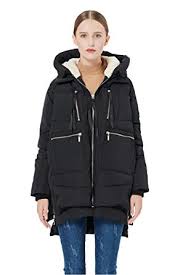
This is not as big a coincidence as it seems since I recently caved and bought myself the Orolay. It sounds like some kind of weird Swedish sled, but it is really a lightweight down jacket with a comfy hood and about five zippered pockets that sells for $129 on Amazon. Every other person in Manhattan has it. “How do you like it?” I asked pointing to my jacket in the very same color, safe on the hook. This question is always good for a one-minute conversation with someone who seems, in the jacket anyway, like a member of the same tribe. “It’s great,” she said “for sticking things in pockets. I have a three-year-old and it fits all her stuff.” Given that in mine I already look like a polar bear on steroids, I couldn’t imagine adding a zipped-up sippy cup to my heft. I nodded enthusiastically anyway. The woman started up the stairs and unzipped one of the pockets. “Oh my god,” she said sticking her hand in. “This isn’t mine.”

I went over to the lone black Orolay that hung on the hook and felt around the pockets sure enough; when I jiggled one, it was heavier than the two pounders I’d just been playing with. These days, I strive to keep my pocketbooks a little more than the weight of a collection of cotton balls; no way I’d overrun my coat pockets with heavy stuff.

Okay.  She had been about to leave the gym wearing my jacket. This was something the geniuses at Amazon who priced these terrific jackets exceedingly well never considered. They don’t come in that many colors. In New York City, not that many people are going to choose beige or even olive green. The city is overrun with women wearing the same black Orolay jacket, no doubt in the same size.  What did I expect?   This woman has a three-year-old.  She’s probably busy enough labeling things for the preschool cubby. Why should she have written her name on the label? I never thought to do that.

For an extra $15, Amazon should have thrown in a tracking device.

“My key is in mine,” she said.  “I wouldn’t have gotten far.”

I’m so glad I said something,” I told her. ”  Mine has my phone and some money.  I guess I wouldn’t have cared about losing the $50 in my pocket. But my phone….”

What was I doing?  Why did I say that out loud?   I was about to go into a class for 45 minutes and leave my jacket on a hook in a public place.  I should have put a sign up on it that said “Steal from me.  It’s okay.  I don’t care about the money.”

We exchanged jackets.  I never did find out what else was in her pockets.

THE AUDI CAN DO IT: How One Man’s Inimitable Faith In His Car Turned Him Into A Humanitarian

Standard

By Elissa Caterfino Mandel

When I was in high school, I lived one major street and a few blocks away from a girl in my French class named Deena Rabinowitz. I didn’t know too much about Deena, except that she didn’t like to conjugate French verbs, her father had died, and she lived with her single mom in a much smaller house than mine. One day after school it snowed, and it wasn’t one of those piddly storms we have today, the ones that close down schools and end up being three inches at best. This one was a show stopper or at least a small car without tire traction stopper. Deena and I were studying over the phone, and she mentioned that her mom’s car couldn’t get up the hill to get to the grocery store. Never mind that nowadays 24 hours before a storm comes, when it’s still only a vague prediction, people swarm supermarkets and the stores run out of things like milk and bottled water. Deena’s mother did not swarm. And apparently she was out of milk. I don’t know how my father found out. It was probably because the whole thing upset me so much that I told him.

In our refrigerator at home, we always had a veritable library of milk arranged by expiration date. I was forever getting in trouble for “taking out” the wrong volume; I can still hear my mom scolding me for opening and drinking from the carton dated March 5 before the one from the end of February. There was a prerogative in my house never to run out of anything. Deena didn’t have the chance to experience that luxury.

My dad listened to my story about Deena’s mom — he couldn’t have known that 23 years later, I, too, would be a widow — and he said that he’d drive her to the grocery store. He wasn’t afraid of a snowy hill or if he was, it didn’t matter. “The Audi can do it,” he told me when I expressed doubt about any of us getting up the hill.

I didn’t know about the Audi, but my dad insisted, so I called Deena back to tell her my dad would drive her mom to the grocery store. It was if he had asked Deena’s mom out on a date. From her end, there was a lot of whispering and giggling. Deena said it was okay, her mom liked her coffee black anyway. The more she told me they could do without, the more my father insisted. I had to call a second time to convince them we didn’t mind. Ultimately my father didn’t end up driving Deena’s mom to the grocery store. He ended up driving Deena there with me along as a chaperone. I didn’t hesitate. Instead, I recall being proud of my dad and his inimitable faith in his car. The sentence “The Audi can do it” has stayed with me for more than 40 years, which is odd, because it wasn’t the Audi he was talking about, not really. He meant that he, Norman, could do it. And he would do it, even when he had to convince the skeptical that his offers were genuine.

I tell this long-winded story about a girl I barely remember to show that my dad lives to take care of people, even those he doesn’t know.

Yesterday when I called him, he was upset because my mom wouldn’t let him drive her to Montclair so they could see the movie Green Book. He couldn’t understand — he knows Montclair, has driven there hundreds of times from at least three different homes. But now he’s 87 and without my mom as a human GPS sitting next to him, he forgets where he’s going even on familiar streets. “I’m the best driver there is,” he says. “Except for Brian.” Brian is my son, and my dad taught him to drive nine years ago when there was no question that he was the man to do it.

My dad should have practiced being a passenger a lot more often when he was younger. Now it is hard for him to move into that seat and into that role.

After my first son was born, I had to fill out a form at the pediatrician’s office asking for “father’s name”. On my first pass, I wrote in Norman Shaw. In view of what happened to my husband less than 10 years after that, my original answer didn’t end up being entirely inaccurate.

In 1991 as a new mom, I found it hard to imagine my dad filling a different role than father. It’s even harder now.

FREE-RANGE BLAZER SHOPPING: What An Unhealthy Obsession With Jackets Communicates About Character

Standard

By Elissa Caterfino Mandel

I have a blazer fixation that can, under duress and with enough encouragement, morph into a jacket fixation. Yesterday, I was in a local store that offers coupons, i.e. discounts, every time after I make a purchase. They text me, so I know exactly when my new coupon has vested, if you will. It’s marketing genius.

These coupons are like crack. I don’t mean to belittle drug addiction in any way. But when I know these coupons are available to me, I’m like a homing pigeon heading back to the place where I know my trough is full.

You know you’re in trouble when you walk into a store and the salespeople greet you by name and say, “We missed you last week. How was your vacation?”

So yesterday, one of my best friends and I decided to meet at Willow Street in Summit. We said we were just going to browse. Yeah, right. That’s what I always tell myself before I shop. It’s like when I stand in my pantry for five minutes pretending I’m not going to rip into the bag of dark chocolate that’s there and really meant for baking.  Just browsing is really not in my repertoire.

Yesterday, I carried a sweater with me that I’d purchased online after seeing a photo of Kate Spade wearing something like it on a vacation on Nantucket where I’ve, incidentally, never been. (And undoubtedly never will go if I keep up my shopping habit.) Anyway, the sweater had flowers and multiple colors on it; need I say it is just gorgeous, and I swore I had at least five tee shirts in my closet that would go perfectly with it. Until it was clear I didn’t.

And then in addition to these tee shirts, there was this great pair of pants and this gorgeous, flowing white shirt that is nothing like anything else I own. So of course the idea that I’d just browse was a sad fiction. A little story I told myself to avoid feeling like a profligate.

And here I am a day later, and there is this little jacket I’m still thinking about. I don’t need this jacket. In fact just this week, I just got rid of a surfeit of summer-weight blazers, many of which haven’t seen the sun in three seasons.

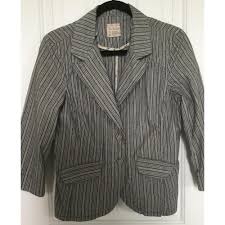
This new jacket thing is becoming unhealthy. If you must know, it’s grey with pinstripes, but the bell sleeves on it make it less serious, a little funky. It looked great with one of the tee shirts I bought, which is yellow and has the message “Mellow Yellow” on it in black letters. For 24 hours, obsessing about this stupid jacket, I’ve been anything but mellow.   I don’t know what brand the jacket is, but it’s the perfect length for my relatively long torso and relatively short legs. And it wasn’t over-the- top expensive for a jacket. I should know.

When I spoke to my sister this morning — it’s her birthday — I told her I wanted to buy this jacket for her.  This is not true.  I want to buy this jacket for me.

Growing up, I remember my mother telling me there were colors and styles she wouldn’t wear.  I don’t remember the styles, but the colors olive green and orange come to mind. I have no such restrictions; when it comes to shopping, I’m more free range.  In a chicken, this is a good thing; in a person, not so much.


The jacket pictured above is not “the blazer,” but one I found on line by FreePeople.  I like it, too.

THE FAKE HAVEN OF A BEACH UMBRELLA

Standard

by Elissa Caterfino Mandel

My beach alias wouldn’t be Surfer Girl; it would be Shade Searcher. Beach umbrellas and canopies are my preferred modes of beachwear. Sun counts as high risk.

But there we were in January at the Gaia Resort in Costa Rica, smack dab in the middle of a reserve for macaws and beachgoers. The beach was a shuttle ride away, and the resort sat on top of a major hill too treacherous for hiking in sandals.

It was also, apparently, too treacherous for the golf cart we were using to ride back to our room.

My story begins in that cart with a man who barely spoke English, and much as it sometimes seem that he and I speak a different language, I’m not referring to my husband. As the golf cart driver tried to power the cart up the hill, he pointed. Flapping the hand that he took off the wheel as if it were a wing, he gestured again. I think we were supposed to intuit that he saw a bird. “Macaws,” my husband said. The driver nodded, and he indicated the birds in a group of trees at eye level. Then the driver held up his phone, motioning for us to get out. We’d seen macaws before but at a distance, and this was an opportunity to capture them so they’d be more than colorful distant specks on our Iphones.

“Stay there,” Hal said to me. “Let me go first.”

If only. Hal’s feet tangled as he hopped out of the cart, and he ended up on his tush on the ground. Righting himself for a brief second on the uneven turf, he fell again, only this time it was over his perpetually untied shoelaces. From there somehow, he tumbled over the low retaining wall, and he began rolling down a hill. Ok. Let me mention that Hal is almost 70 years old. Let me emphasize that the hill was steep; hence, the retaining wall. Let me suggest that perhaps the photo-obliging golf cart driver never should have stopped the cart where he did; we were on the upward incline of a hill that was a calf killer the few times we’d walked it. And let me repeat that we were in Costa Rica in a beach community called Manuel Antonio; it’s miles from a major medical center, to say nothing of a decent restaurant.

I pictured the hospital bills, the broken bones, the paralysis… Had we even renewed our Medjet membership? That’s the thing you pay $500 a year for in hopes you never actually use it. It transports you by air, free of charge, to the best medical center in your relative vicinity. I can see the envelope now, sitting home, unopened in the box in my kitchen, on my perennial to-do list.

Midway into Hal’s third roll, he was stopped by the very same tree where the macaws once perched. They were no longer there. They’d been scared away by the sound of me screaming.

By this time, I was out of the cart, and it wasn’t until Hal stood up and started laughing that I breathed. Oh, good. This would be relegated to the annals of “funny vacation story,” like the time I’d inadvertently stepped into the wading pool at the Hollywood Hyatt in my sneakers because I had a book in my face and my reading glasses on.

In retrospect, the most disturbing thing about the incident is that our golf cart driver just sat there. He never asked how Hal was or indicated he was concerned in any way. Maybe he didn’t have the English skills to express the horror of what he had witnessed. Perhaps he thought Hal and I were engaged in some kind of weird American mating ritual. As he took us the rest of the way to our room, we were laughing so hard I worried he thought we were drunk.

A few weeks later Hal was in the rheumatologist’s office, and the doctor noted that his wrist was swollen. “Have you fallen recently?” she asked. He shook his head. Nice to have blocked the whole thing – unlike me, he doesn’t have the horror film “Narrowly Averted Medical Apocalypse” playing in his brain.

Maybe it’s fluid from gout, she said, and she suggested draining it with a needle. Luckily Hal said no. It was only the next day that he remembered about his topple into the jungle. We never did get a good picture of the macaws.

But the image of Hal, rolling on the hill? That one’s permanently etched in my brain.   It’s like the thing behind the door in the horror movie that never actually gets out, but you somehow know it’s there, waiting for you. I only hope when it comes, we will be able to do what we did this time – ride off as we laugh it away.


ELEPHANTS IN THE PLUNGE POOL “Hello, I’d like to be connected to the lions.”

Standard

by Elissa Caterfino Mandel

If you don’t wear your glasses and have a wonderful imagination, the Quarry, which backs up to our townhouse, looks like the Grand Canyon.  Because of the way our half-of-a-house sits — at a safe distance from where the birds and other wildlife congregate — experiencing nature through the windows is like watching it virtually. It’s theoretical; it’s distant; it almost seems fake. For the leery, it’s perfect.

The elephants, however, were real.

We’d spotted them one chilly afternoon 8,000 miles from the Quarry, an entire herd, and they were using their trunks to drink from the plunge pool that sat behind our unit. All that separated us from about 20,000 pounds of elephants was a tenuous sliding glass door.  Could the elephants see us?  More aptly, what did they want from us beside pool water?

Proximity to jungle animals — this was what we had wanted when we went on safari, wasn’t it? However,  outside our door on the deck that touched our unit seemed a little too close.

“Are you getting it?  Are you getting it?” I asked Hal, who was using his weapon of choice to tackle the elephant invasion — Iphone video.

As he filmed, something unpleasant occurred to me.   “Do you think they can see us?”  I said.  Frantically, I began Googling “eyesight of adult elephants”.    Did I really think they were going to spot me in my towel and charge,  marauders through our sliding glass door? Given that we were accompanied to our lodge every night by a guard with a gun?  Well, yes: I did think that.

Un-summoned, the elephants remained for about a half hour — sipping messily with their trunks at the plunge pool, where I had been swimming less than 24 hours before.  It seemed ironic.  The day before, we’d been searching for them for hours with a guide in a jeep.  If I had known getting the elephants to come was as simple as inviting them to my back deck for a swim, I never would have gotten up at five in the morning to search for them.  After this, we could try for the lions.

“The elephants in our plunge pool” is what our Facebook caption ultimately said. “Our” plunge pool? Really? What made it ours?  If anything, it was a pool we were borrowing, and it’s not clear from whom. The safari lodge? Or were we using something that really belonged to the jungle? Who should the elephants have asked permission to drink from our plunge pool? The lions?

I still remember how the tiniest elephant in the group tried to maneuver her extremely short trunk into the plunge pool and reach for some water.  “I feel like I should carry out some Poland Spring,” said Hal, who must have had a secret wish to be trampled.

Next, he’d be providing the fox that we sometimes see at home in the Quarry with lemonade.

Everyone around me talks about having a bucket list. Africa was on mine; specifically a safari. It’s easy to sit in a jeep in your khaki best and check off the boxes. I’ve seen the big five – elephants, rhinos, hippos, lions and giraffes; I’ve hiked – well, at least partially hiked — Table Mountain.   It’s the memory of that plunge pool drink fest that will stick with me — and a few weeks later my granddaughter’s wonderful two-year-old voice saying, “I want to see picture of effants.”

A day after we filmed the elephants, we heard that a bunch of fish had been electrocuted in a pond because of a lightning strike, and we saw the evidence from our safari jeep – hundreds of lifeless eels floating on top of the water. I remember that to comfort herself about the prospect of death, my niece used to go around talking about the circle of life. Sad as it was to witness, the eels’ untimely death seemed like the personification of that very idea. Wrong pond, wrong time; oh, well.

A year and three months later, I think mostly about the baby elephant, the one whose trunk couldn’t reach the pool water. I suspect I’ll never go back to Africa to ask the question about chlorination in the plunge pool water and the health of the elephants who drank it. But as I sit and look at the birds flying around the Quarry, I wish I were the kind of person who would lobby more for the well-being of the things I see every day, even if it meant I were to travel less.