
By Elissa Caterfino Mandel
No more rearview window humanitarianism for me. For five years, I had watched my son volunteer with”differently abled” children at the Friendship Circle from the safety of the front seat of my car. I pulled away every Sunday morning while he did the heavy lifting. It was time to stop pretending I was a good person because of my close genetic link to a former volunteer.
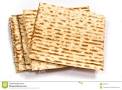
Last Sunday, a good three weeks before Passover, my friend Lisa invited me to volunteer with her at a matzoh-making event at Lifetown, the new Friendship Circle headquarters right off Route 10, less than 10 miles from where I used to do drop off. Heading over, I decided to focus on something I could deal with, that I didn’t know exactly where I was going. This was preferable to my other concern, that I didn’t know exactly what I was doing.
Lisa has been talking about Lifetown for weeks. Many Sundays, she volunteers there with autistic children and teens, and it’s where her son Harry now has a career. Let me just put it out there. Lifetown is a funny name. It sounds just enough like the local fitness center Lifetime so that when you go, most people will believe you’re headed to the gym. But as Lisa said being at Lifetown offers a very different kind of endorphin rush.
I was afraid I would not get that kind of rush or any rush at all, other than one that would lead me right out the door. Cancel that. I was afraid period. Years ago, my son had told me about a story about something that happened when he was volunteering for the Friendship Circle. The boy he was working with — known then as his “special friend;” there may be more politically correct nomenclature now– began doing something decidedly un-special: hurling pretzels across the room. By the time this happened, my son had been exceptionally well trained by the Friendship Circle. Flying pretzels did not faze him. Little did. I’d done nothing to prepare for my volunteer hours Sunday but go to Starbucks and drink coffee. I wasn’t ready. This kind of work, I imagine, is like changing a ceiling lightbulb without a step-stool. I could easily end up hanging by an arm.
Let me just report that the Lifetown complex, and it is a complex, was nothing like what I expected. It’s a great example of what can happen when lots of money gets together with love and commitment.
The Friendship Circle’s new home is an amazing facility; under construction are a handicapped-accessible pool, rooms specially outfitted for sensory stimulation, and touch tanks. A gym with equipment for those with physical challenges is already up and running. One day soon, there will even be an opportunity for young adults with special needs to have real work experiences in a specially constructed town with a bookstore, hair salon, pet and grocery stores and a bank. It’s Mr Rogers Neighborhood on steroids. But this is no place for Henrietta Pussycat. Nor, when I walked in, was I sure it was for me.
I’m not going to lie. Being there was not easy. I had tears in my eyes a lot of the time especially as I watched Lisa’s grown son working with the child who’d been assigned to him. I’ve known Harry since he was a toddler playing with my own boys. To see him navigating his post-college professional world in such a meaningful way was beyond moving.
Lisa had been assigned to D., a preteen who, according to the program, was labeled high functioning. My job was to follow them through mundane matzoh tasks. Pounding. Rolling. Screaming in excitement. Lisa and I were kind of extraneous. D. worked the room.
The first thing D. said to me when we met me was “I like your shoes.” And like the chump that I am, I deflected her compliment. “Oh, well, these have rubber soles and they’re easy to wear,” I said. Why did I say that? Did I really think she would care about rubber soles? Was I planning to help roll matzoh dough or run a marathon? “They’re pretty,” she said, but then she moved past me, happy to be with the friends she sees every week.
In spite of her enthusiasm, she came with the saddest story of all. She is sister to E., a younger, non-verbal Lifetown member for whom the raucous nature of the matzoh room proved too much. Lisa and I volunteered to watch him to give his recently widowed mom a break. Yes, that’s right. The mom was widowed. It wasn’t enough that she had two children with special needs to care for, one with severe autism. Her husband had to die of cancer, too. As I watched Lisa speak calmly to E., I was in awe. But the music grew louder, and E. reached for her arm and began to head butt it. She looked at me. “We may be in over our heads,” was all she said.
Driving away had been easy years ago. But even then I knew it wasn’t the right thing to do.






 Adventures of A Suburban Mom