
By Elissa Caterfino Mandel
When I was in high school, I lived one major street and a few blocks away from a girl in my French class named Deena Rabinowitz. I didn’t know too much about Deena, except that she didn’t like to conjugate French verbs, her father had died, and she lived with her single mom in a much smaller house than mine. One day after school it snowed, and it wasn’t one of those piddly storms we have today, the ones that close down schools and end up being three inches at best. This one was a show stopper or at least a small car without tire traction stopper. Deena and I were studying over the phone, and she mentioned that her mom’s car couldn’t get up the hill to get to the grocery store. Never mind that nowadays 24 hours before a storm comes, when it’s still only a vague prediction, people swarm supermarkets and the stores run out of things like milk and bottled water. Deena’s mother did not swarm. And apparently she was out of milk. I don’t know how my father found out. It was probably because the whole thing upset me so much that I told him.
In our refrigerator at home, we always had a veritable library of milk arranged by expiration date. I was forever getting in trouble for “taking out” the wrong volume; I can still hear my mom scolding me for opening and drinking from the carton dated March 5 before the one from the end of February. There was a prerogative in my house never to run out of anything. Deena didn’t have the chance to experience that luxury.
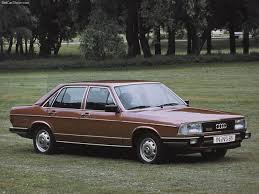
My dad listened to my story about Deena’s mom — he couldn’t have known that 23 years later, I, too, would be a widow — and he said that he’d drive her to the grocery store. He wasn’t afraid of a snowy hill or if he was, it didn’t matter. “The Audi can do it,” he told me when I expressed doubt about any of us getting up the hill.
I didn’t know about the Audi, but my dad insisted, so I called Deena back to tell her my dad would drive her mom to the grocery store. It was if he had asked Deena’s mom out on a date. From her end, there was a lot of whispering and giggling. Deena said it was okay, her mom liked her coffee black anyway. The more she told me they could do without, the more my father insisted. I had to call a second time to convince them we didn’t mind. Ultimately my father didn’t end up driving Deena’s mom to the grocery store. He ended up driving Deena there with me along as a chaperone. I didn’t hesitate. Instead, I recall being proud of my dad and his inimitable faith in his car. The sentence “The Audi can do it” has stayed with me for more than 40 years, which is odd, because it wasn’t the Audi he was talking about, not really. He meant that he, Norman, could do it. And he would do it, even when he had to convince the skeptical that his offers were genuine.
I tell this long-winded story about a girl I barely remember to show that my dad lives to take care of people, even those he doesn’t know.
Yesterday when I called him, he was upset because my mom wouldn’t let him drive her to Montclair so they could see the movie Green Book. He couldn’t understand — he knows Montclair, has driven there hundreds of times from at least three different homes. But now he’s 87 and without my mom as a human GPS sitting next to him, he forgets where he’s going even on familiar streets. “I’m the best driver there is,” he says. “Except for Brian.” Brian is my son, and my dad taught him to drive nine years ago when there was no question that he was the man to do it.
My dad should have practiced being a passenger a lot more often when he was younger. Now it is hard for him to move into that seat and into that role.
After my first son was born, I had to fill out a form at the pediatrician’s office asking for “father’s name”. On my first pass, I wrote in Norman Shaw. In view of what happened to my husband less than 10 years after that, my original answer didn’t end up being entirely inaccurate.
In 1991 as a new mom, I found it hard to imagine my dad filling a different role than father. It’s even harder now.
 Adventures of A Suburban Mom